FFcP + Pentatonic Fretboard Mastery
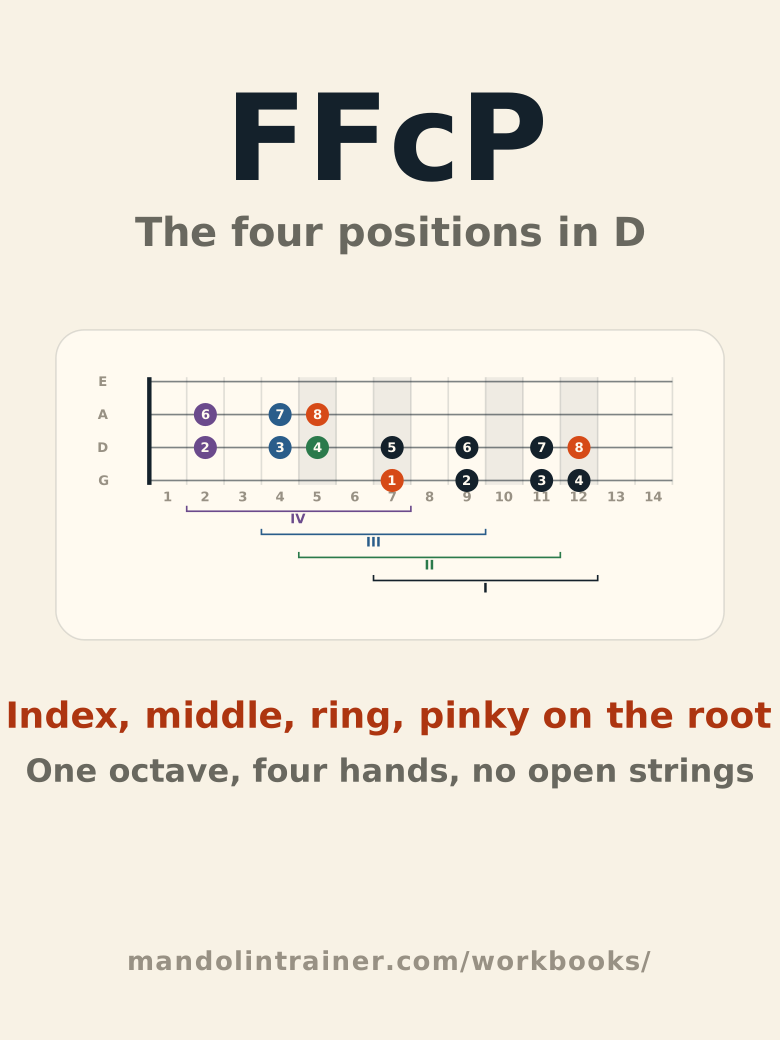
FFcP is four finger closed position: four fingerings of the same one octave major scale, each named by which finger sits on the root. Position I puts the index there, II the middle, III the ring, IV the pinky. None of them uses an open string, which is what lets all four move to any key without changing a thing. The five pentatonic shapes are the other map: five windows on the neck covering the same five notes, 1, 2, 3, 5 and 6, from the nut to the top of the neck and around again.
This workbook spends eight weeks laying one over the other. Two weeks giving the four positions fixed addresses, two joining the five shapes into one road, two finding the pentatonic inside every position and aiming it at the chord changes, and two putting all of it into real tunes under pressure. It is for a player who can already get around the instrument and wants the neck to stop being a place they recognize only in patches.
A day is 20 to 25 minutes in timed steps. It ends with a proof line and three quick ratings instead of a score. Every day carries a fretboard diagram of the shape it works on. Use it for the first check, then cover it. The plan is strict about that, since a shape you can only find with the picture open is not one you know yet.
This is a workbook, and a workbook is paper. Nothing on it listens. The lessons, and the checks on your playing, are in the app.
How to use this workbook
- One day a day. A card is one sitting of 20 to 25 minutes. When the sitting is done, close the page.
- Use the diagram on the card for the first check, then cover it. You are trying to find the shape without it.
- Set one control tempo that keeps the pulse honest, and raise it only after a clean pass. The FFcP exit tempo is a quarter note at 100.
- Say scale degrees often and note names on selected reps. Degrees tell you what a note is doing; names confirm where you are.
- When a rep fails, isolate the exact joint or call that failed. Do not restart the whole exercise.
- Record on checkpoint days, and listen once with the instrument out of your hands.
- Advance when the week's exit standard passes on two attempts at least ten minutes apart. If it did not, repeat only the days that failed.
- Before Day 1: have a backing track or a drone ready in G, A, C, D, E, F and B flat, and make twelve paper slips, or use a randomizer, carrying keys, positions I to IV, shapes 1 to 5 and the chord functions I, IV and V.
The weeks
- Week 1Give the Four Positions Fixed AddressesSeven days turning four closed fingerings into four places on the neck you can start from without looking, in D and then in C.
- Week 2Make the Address System MovableSeven days carrying the same four positions through G, A, E, F and B flat, until relocating is instant and nothing has to be relearned.
- Week 3Turn Five Shapes into One Connected MapSeven days on the five major pentatonic windows in C, spent almost entirely at the joints between them rather than inside them.
- Week 4Transpose the Map and Make Diagonal RoutesSeven days moving the five pentatonic shapes into four more keys, and learning to travel across the neck instead of up and down inside one box.
- Week 5See the Pentatonic Subset Inside Every FFcP ZoneSeven days taking degrees 4 and 7 out of a major scale you already know, and finding the five-note set was inside the fingering the whole time.
- Week 6Aim the Map at the Chord ChangesSeven days staying in one zone long enough to see every chord that passes underneath it, and landing on their notes on purpose.
- Week 7Use the Map Inside Real FormsSeven days putting the zones, the subsets and the target tones into three tunes, with the form kept intact through every chorus.
- Week 8Make the Map Available on DemandSeven days auditing what is reliable, repairing only that, and then playing the whole thing through on tunes.
Run the plan by evidence, not dates. The standard route is eight weeks: complete every page. Move sooner only when the checkpoint is genuinely automatic, or the calendar is just a label.
Seven weeks: after Week 3, take its exit test in two keys. If both pass, skip Week 4 and continue at Week 5, adding the Week 4 diagonal and rhythm drills to your warm-ups through Weeks 5 to 7.
Six weeks: only if both early gates pass. After Week 1, test in D, C and one surprise key; after Week 3, test the five-shape chain in two keys. If they pass, skip Weeks 2 and 4. Never compress Weeks 5 to 8.