G7 mandolin chord
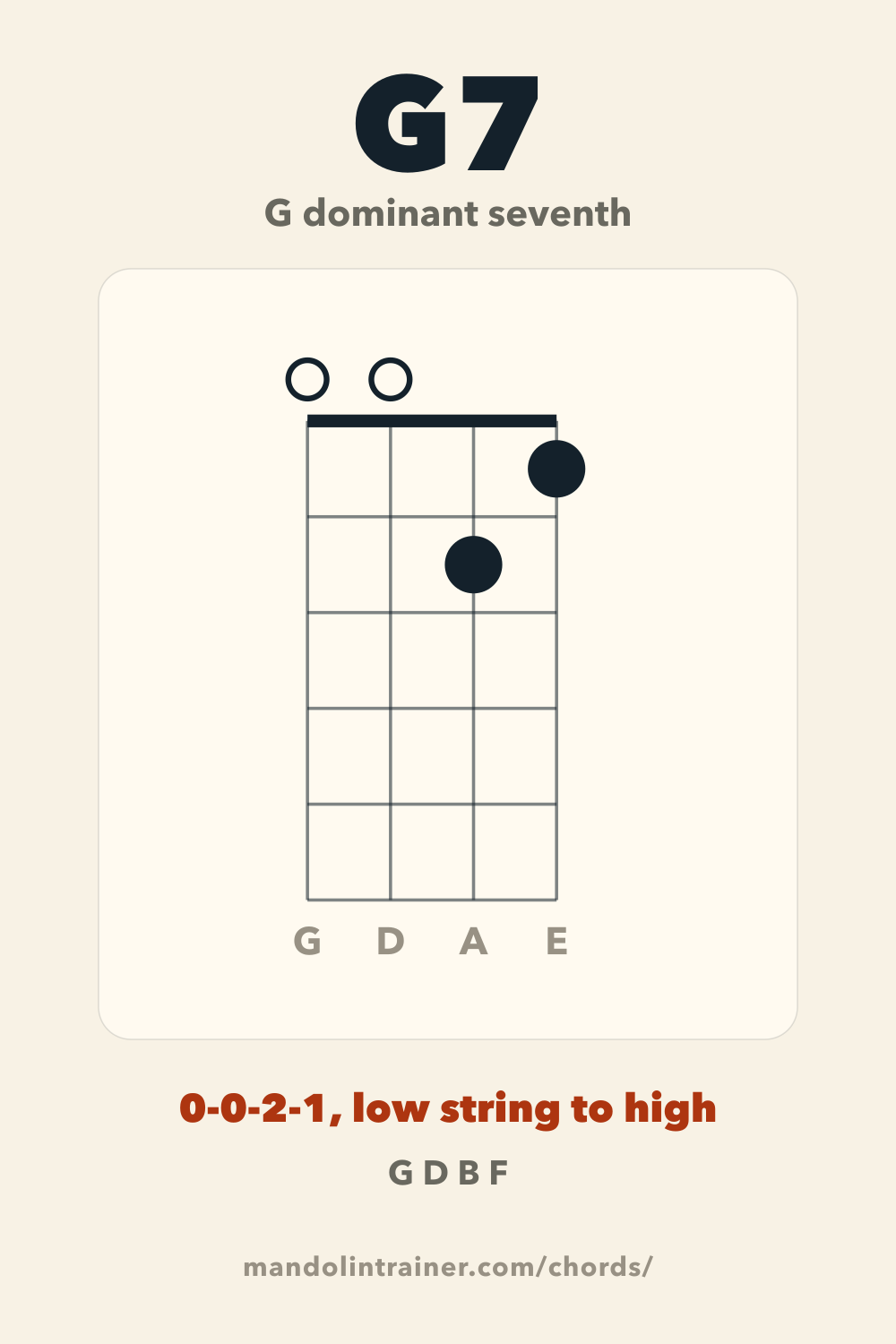
G dominant seventh on mandolin is 0-0-2-1, low string to high (G D A E), and it sounds G D B F. It is one of the seventh chords on the chart.
The shape
Nut at the top, strings running down the page low to high, G D A E. The numbers under the name are the frets in that order. A filled dot is a finger and a hollow dot is the string you add when your hand allows it. An o above the nut is an open string, and a dashed o is an open string you can leave out.
First finger on the E pair at the first fret, second finger on the A pair at the second, and the G and D pairs ring open, the same two courses that ring in the G major.
It is the G major with the E pair brought down two frets, G to F. That F is the flat seventh, the note that makes a seventh lean somewhere. This grip keeps all four notes of the chord, one to a course: the root, the fifth, the third and the seventh.
Where it turns up
The V7 chord that pulls back to C. That pull is the whole job of a seventh: it makes the chord after it sound like home.
Tunes that use it
Written out here with the chord letters over the bars where the change happens, so you can put the shape under something rather than drilling it on its own.
A diagram cannot hear you
Mandolin Trainer listens through your microphone, hears which notes of the chord are sounding, and names the string that should be carrying a note it cannot hear, which is the thing a diagram can never do. The Chord Theory section teaches these shapes and then checks them. Free while it is in beta.
Open the appRuns in your browser. The audio never leaves your device. iOS app coming soon.
Other seventh chords
A dominant seventh has four notes and this instrument has four courses, but the ones that fit a hand give a note up. Some of these keep the root, and some keep the fifth and the third and let the root go: that is a shell, and it is what a mandolin plays behind a fiddle anyway.